
Introduction
Hydrogen Transport Solutions in New Zealand.
New Zealand's hydrogen transport sector has moved beyond concept vehicles.
The comparable fuel cell vehicle data sheets are prepared for fleet planning and the forthcoming mixed-fleet hydrogen-demand calculator.
Fuel cell trucks are carrying freight, hydrogen-diesel dual fuel trucks are performing commercial work, hydrogen cars are available through a limited rental programme, and locally developed hydrogen vessels have demonstrated what the technology can achieve on the water.
The market remains small, however. Hydrogen is most convincing where vehicles need high utilisation, substantial range, rapid refuelling or more payload than a large battery system can practically provide.
What Is Operating in New Zealand?
What Is Operating in New Zealand?
New Zealand now has commercial vehicles, working trials and locally developed systems demonstrating hydrogen transport in real operating conditions.
Hydrogen transport activity can be divided into three groups:
- Vehicles undertaking regular commercial work.
- Working vehicles being evaluated through trials and demonstration programmes.
- New Zealand-developed systems that have proven their performance and created export opportunities.
This distinction matters. A successful demonstrator establishes that the technology works; a commercial fleet must also demonstrate reliable fuel supply, predictable costs, servicing support and acceptable lifetime economics.
Hyundai XCIENT: Hydrogen Freight in Commercial Operation
Hyundai XCIENT: Hydrogen Freight in Commercial Operation
The strongest local evidence for hydrogen transport comes from the Hyundai XCIENT fuel cell electric vehicle operated by NZ Post.
The truck is manufactured by Hyundai Motor Company and was introduced and supported locally by Hyundai New Zealand. Hydrogen passes through two fuel cell stacks to generate electricity for a 350 kW electric motor, while a 72 kWh battery supports acceleration and stores energy recovered during braking. Approximately 32 kg of hydrogen is carried at 350 bar, providing a nominal range of around 400 km.
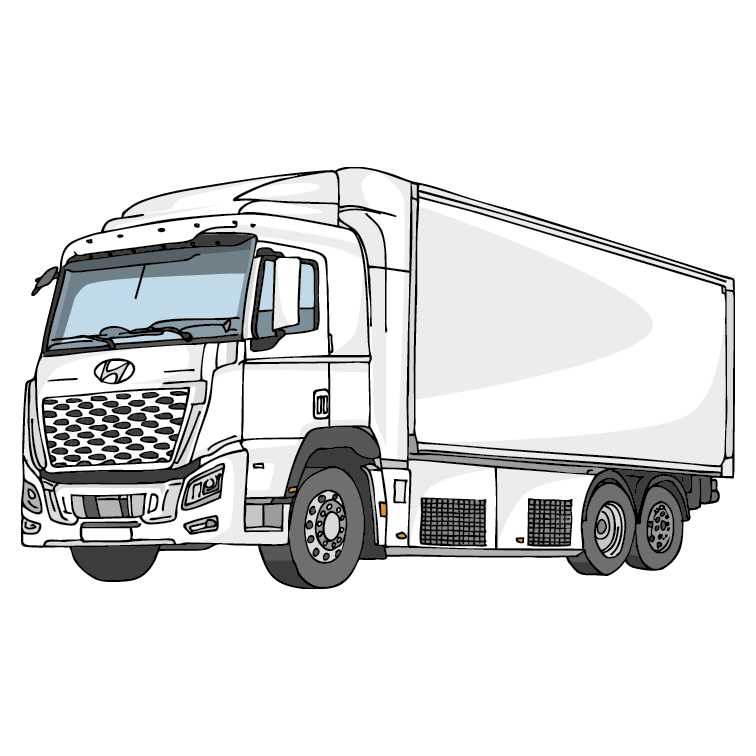
NZ Post has used the truck for parcel movements within Auckland and between Auckland and Hamilton. It passed 100,000 km of commercial operation without reported technical, range or refuelling problems. Over those first 100,000 km, NZ Post reported that it displaced 41,667 litres of diesel and avoided about 112 tonnes of carbon dioxide emissions.
This is important because the truck did not merely complete a controlled test. It replaced a diesel vehicle in a working logistics operation without reducing productivity.
The XCIENT demonstrates hydrogen's principal heavy-freight advantages:
- diesel-like operating range;
- strong electric torque;
- relatively short refuelling stops; and
- less battery weight than an equivalent long-range battery-electric truck.
See Also
Other Links
New Zealand-built GBV Fuel Cell Trucks
New Zealand-Built GBV Fuel Cell Trucks
A particularly significant development is the production of 50-tonne fuel cell prime movers by Christchurch-based GBV Technology.
GBV locally integrates the hydrogen tanks, fuel cells, battery, controls and electric driveline into a heavy truck platform. The current TR Group specification is based on a DAF CF 85 6x4 tractor unit and uses two Toyota 85 kW fuel cells, a 124 kWh battery and a 350 kW electric drive system. It carries approximately 52 kg of hydrogen and has an indicated working range of 450-500 km.
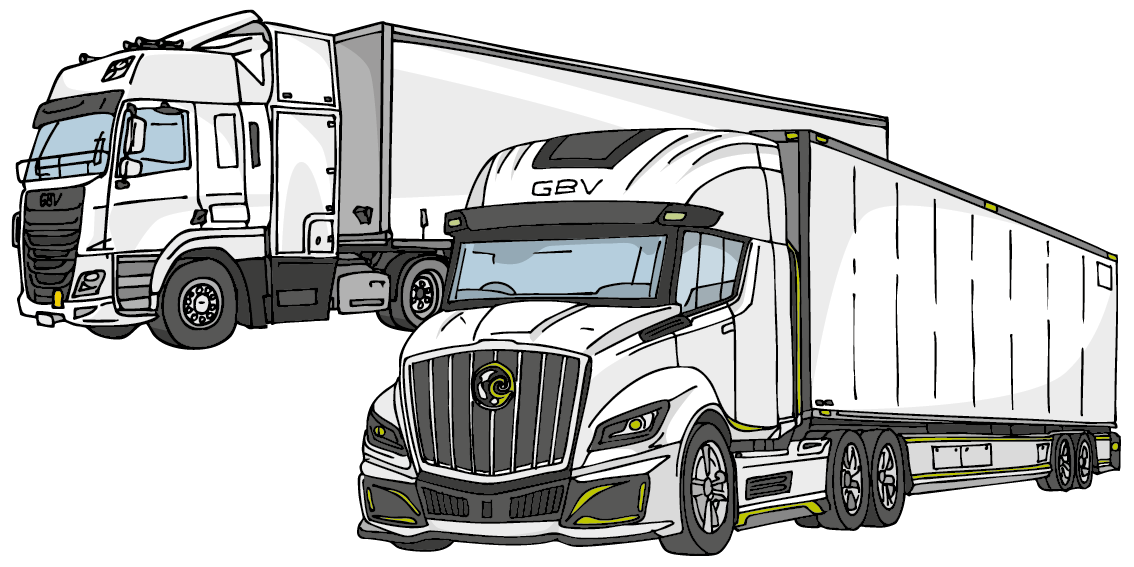
TR Group provides the vehicles through fully maintained operating leases and long-term rentals. This gives transport operators access to the technology without requiring them to take all the residual-value, maintenance and technology risk associated with purchasing a new type of vehicle.
TR Group reported more than 11,000 km of testing in its first GBV tractor unit during the 2025 financial year. In 2026, a GBV truck supplied by TR Group entered commercial freight work with Booth's Logistics, transporting solar equipment between Auckland and Ruakākā. The truck completed 22 return trips of approximately 310 km.
The wider significance is not limited to the trucks themselves. The programme is building New Zealand capability in fuel cell integration, high-pressure hydrogen systems, controls, certification, servicing and heavy-vehicle manufacturing. Those skills can support domestic fleets and become exportable intellectual property.
See Also
Other Links
HWR and Change Fuel Technologies: Hydrogen-diesel Conversion
HWR and Change Fuel Technologies: Hydrogen-Diesel Conversion
Fuel cell trucks provide zero-emission operation at the vehicle, but replacing a complete heavy vehicle is expensive.
HW Richardson Group has developed a transitional alternative through its Change Fuel Technologies business. The system converts an existing diesel truck to operate on hydrogen and diesel together. Hydrogen is stored in high-pressure tanks behind the cab and injected during the engine's intake stroke. Diesel remains the ignition fuel, but part of the diesel energy is displaced by hydrogen.
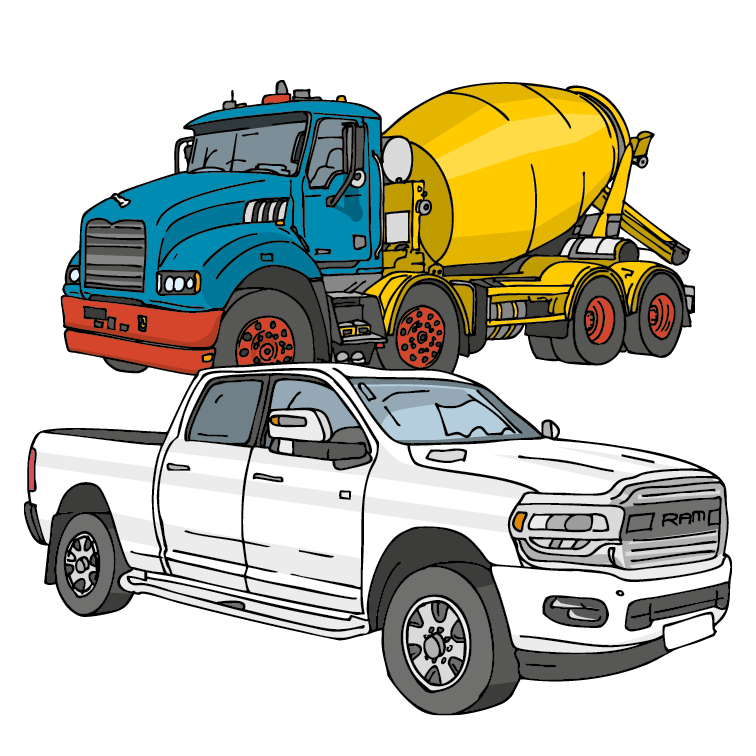
HWR has converted milk tankers, freight trucks, bulk-haulage vehicles and a concrete truck. Its website describes multiple truck-and-trailer units operating around New Zealand, with reported carbon reductions of up to 40% in dual fuel mode. EECA's review records typical results of around 30% diesel displacement without loss of normal operating performance.
The conversion approach offers several practical benefits:
- an operator can retain a relatively new truck instead of replacing it;
- the vehicle can revert to diesel if hydrogen is unavailable;
- refuelling can be synchronised with the normal daily operating cycle; and
- fleet operators can gain experience with hydrogen before committing to fully fuel cell powered vehicles.
Dual fuel is not a zero-emission solution. It continues to consume diesel, and hydrogen combustion is less energy-efficient than using hydrogen through a fuel cell. Its value is as a transitional pathway for vehicle classes and operating loads where complete replacement is not yet commercially practical.
Other Links
Hyundai MIGHTY: Hydrogen for Lighter Commercial Work
Hyundai MIGHTY: Hydrogen for Lighter Commercial Work
Hyundai New Zealand has also introduced a MIGHTY fuel cell truck for a local evaluation programme.
This lighter truck combines a 90 kW fuel cell system, an electric motor and a 22 kWh battery. Hyundai indicates a range of approximately 500 km and a refuelling time of around 5-10 minutes. The evaluation vehicle has a refrigerated body, allowing the trial to assess hydrogen electricity for both propulsion and temperature-controlled cargo.

The potential market includes regional deliveries, food distribution, service vehicles and refrigerated freight. However, medium-duty battery-electric trucks are developing quickly, so hydrogen will need to demonstrate a clear advantage in range, payload, daily utilisation or auxiliary power demand.
See Also
Other Links
Hydrogen Buses
Hydrogen Buses
New Zealand's first hydrogen fuel cell bus was designed and built in Christchurch by GBV Technology for Auckland Transport.
The three-axle bus was developed for New Zealand operating and regulatory requirements and entered a trial on Auckland's route 70. GBV integrated the electric powertrain and hydrogen system, using fuel cell technology supplied by Canada's Ballard. The project demonstrated that New Zealand could design, build, certify and support a hydrogen city bus locally.

The bus should be regarded as a working demonstrator rather than evidence of broad commercial adoption. Battery-electric buses have become the main zero-emission choice for New Zealand urban fleets. Hydrogen may still have a role on unusually long routes, high-utilisation schedules or services where charging time and depot electricity capacity become constraints.
See Also
Other Links
Toyota Mirai and Hyundai NEXO Passenger Vehicles
Toyota Mirai and Hyundai NEXO Passenger Vehicles
Fuel cell cars offer conventional driving range and rapid refuelling, and can make sense in controlled fleets supported by either a compatible public station or a private on-site supply.
Toyota's Mirai fuel cell sedan has been used in corporate car-sharing and business leasing programmes since 2022.
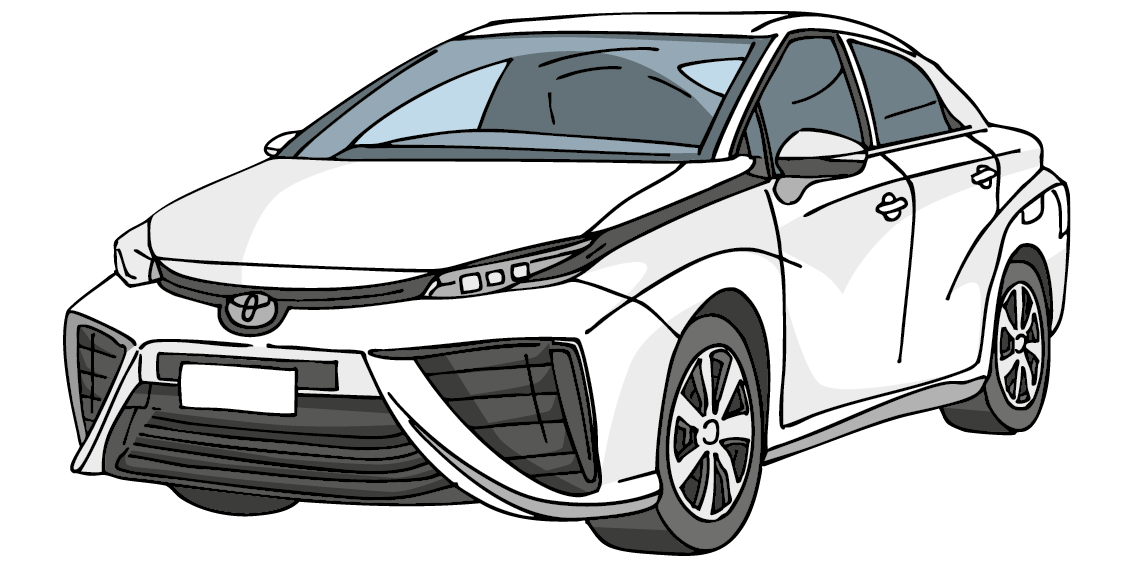
In August 2026, Ezi Car Rental added three Mirai vehicles to its Palmerston North Airport fleet, creating New Zealand's first hydrogen rental-car programme. The vehicles are available to eligible business customers and are supported by Toyota-trained technicians and Hiringa's nearby refuelling station.
Hyundai has also operated a small number of NEXO fuel cell SUVs in New Zealand.
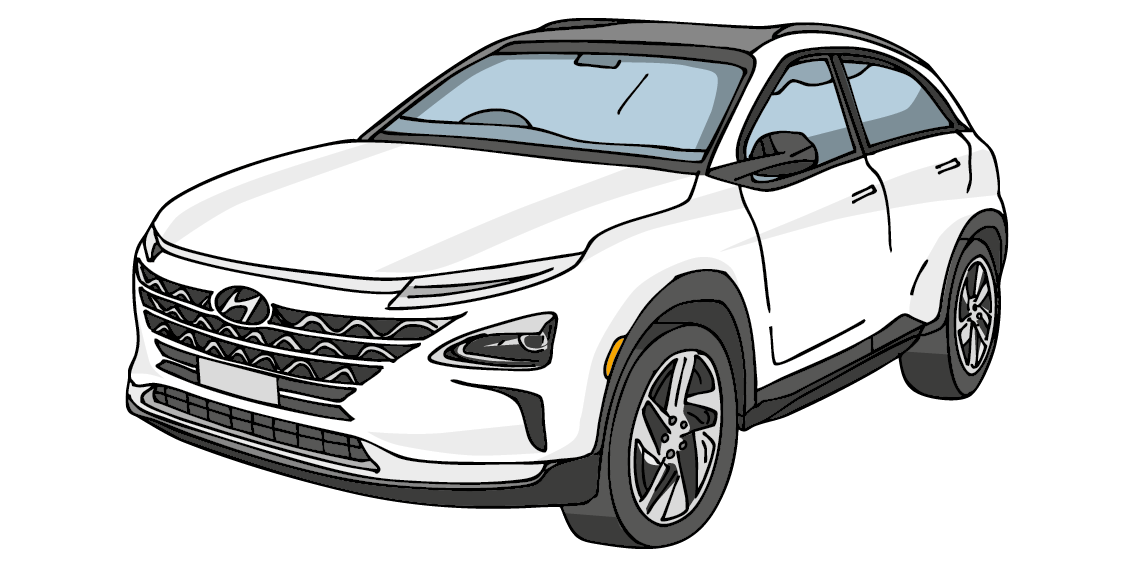
These vehicles show that hydrogen cars can provide quiet electric driving, rapid refuelling and conventional vehicle range. Nevertheless, passenger cars are unlikely to be New Zealand's strongest hydrogen market. Battery-electric cars already have widespread charging access and use renewable electricity more efficiently.
Hydrogen passenger vehicles remain constrained by the small number of compatible public refuelling stations, particularly because light vehicles commonly require 700-bar filling while much heavy-transport infrastructure is designed around 350-bar operation.
A business does not necessarily need to wait for a large public station. A micro electrolyser integrated with suitable compression, storage and dispensing can produce up to 10 kg of hydrogen per day and provide private 700-bar refuelling at a business site. This creates a positive near-term pathway for controlled, return-to-base fleets whose daily demand can be matched to local production.
See Also
- Data Sheet: Toyota Mirai
- Data Sheet: Hyundai NEXO
- Product Page: Micro Electrolysers and On-site FCEV Refuelling
Other Links
Toyota FCEVs to Watch
Toyota FCEVs to Watch
Toyota's international fuel cell programme shows how hydrogen transport could expand into utes, premium cars and buses.
Toyota is expanding its fuel cell vehicle range internationally. The Crown and Sora are established production vehicles in Japan, while a production fuel cell Hilux is planned for Europe in 2028. These vehicles could eventually become options for New Zealand, including through the used-import market, but no local release has been confirmed. Any imported vehicle would need to meet New Zealand certification requirements and have suitable refuelling, servicing and parts support.
Toyota Hilux FCEV
Toyota built ten Hilux fuel cell prototypes in the United Kingdom to evaluate how hydrogen technology could work in a practical commercial vehicle. Toyota has now confirmed that a production fuel cell Hilux is planned for 2028, targeting a range of more than 400 kilometres and a towing capacity of up to 2.5 tonnes.

A fuel cell Hilux could be relevant to New Zealand businesses needing a hard-working vehicle with useful range, rapid refuelling and less dependence on very large batteries. Its prospects here will depend on price, payload, right-hand-drive availability, service support and access to hydrogen. Unlike the Crown and Sora, it is not yet an existing Japanese used-import opportunity.
Toyota Crown FCEV
The Crown Sedan FCEV has been sold in Japan since November 2023. It uses the second-generation Mirai fuel cell system, with three high-pressure hydrogen tanks. Toyota specifies a driving range of approximately 820 kilometres and a refuelling time of about three minutes.

As a right-hand-drive Japanese production car, the Crown is the most plausible of these models to appear eventually as a New Zealand used import. It could suit chauffeur services, corporate fleets and rental operations based near a reliable hydrogen station. However, Toyota has not announced New Zealand availability, and prospective importers would need to confirm certification, fuel compatibility, warranties, parts and local servicing.
Toyota Sora FCEV Bus
Toyota began selling the Sora fuel cell bus in Japan in March 2018. It accommodates up to 79 people and uses two 114 kW fuel cell stacks, two electric traction motors and ten hydrogen tanks operating at 70 MPa. It can also provide up to 235 kWh of external electricity, allowing a suitably equipped bus to support emergency power during a disruption.

For New Zealand, the Sora demonstrates how hydrogen could support intensively operated urban routes while creating dependable demand for a depot-based hydrogen supply. Its rapid refuelling and emergency-power capability are attractive, but any local deployment would need to be compared with battery-electric buses and supported by heavy-vehicle certification, route-compatible dimensions, specialist maintenance and reliable hydrogen infrastructure.
Could These Vehicles Come to New Zealand?
Japanese-market vehicles do not automatically qualify for use here. Imported cars and buses must satisfy New Zealand safety and emissions standards, undergo entry certification and be registered and licensed. Fuel cell vehicles also need compatible hydrogen stations, trained technicians and contingency arrangements if fuel is unavailable.
Other Links
Hydrogen-powered Marine Transport
Hydrogen-Powered Marine Transport
New Zealand has developed some of its most internationally visible hydrogen transport technology on the water.
Emirates Team New Zealand designed and built the foiling chase boat Chase Zero, supported by Toyota New Zealand, GBV Technology and Gurit Composites. Toyota supplied the fuel cell technology, while GBV assisted with powertrain integration. The boat demonstrated cruising speeds of 28-30 knots, top speeds exceeding 50 knots and a published range of approximately 330 km. The concept subsequently became the basis for six hydrogen chase boats used by teams at the 2024 America's Cup in Barcelona.
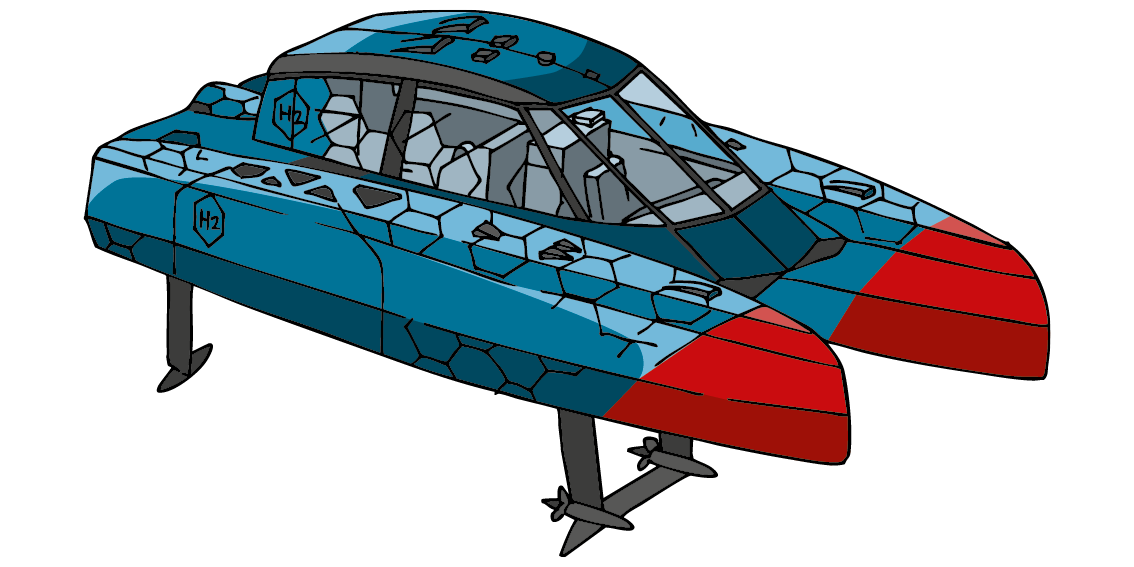
Christchurch companies Fabrum and King Watercraft have also developed H2Ocean, a hydrogen-powered rigid inflatable boat. It carries 18 kg of hydrogen at 350 bar. The fuel cell maintains charge in a battery bank that supplies two electric stern drives. The adaptable vessel was developed for tourism, passenger transfer, coastguard, servicing and event-support duties, with sea trials beginning in 2025.

These projects do not yet represent regular hydrogen passenger services. They do demonstrate a credible New Zealand speciality: high-performance, purpose-built marine systems where range, weight, rapid refuelling and quiet zero-emission operation can justify the additional complexity.
Other Links
The Infrastructure Supporting the Vehicles
The Infrastructure Supporting the Vehicles
Vehicles will not create a market without dependable fuel.
Hiringa Energy has developed heavy-vehicle hydrogen refuelling stations in Wiri, Te Rapa, Palmerston North and Tauriko. Together, these locations connect many of the North Island's principal freight routes. The stations produce or dispense green hydrogen and are designed for truck-and-trailer combinations, self-service operation and consecutive commercial fills.
TR Group's published hydrogen offer includes a fuel-price cap of $16.50 per kilogram plus GST through Hiringa for the term of an eligible vehicle lease. This is a commercial programme price rather than a universal New Zealand retail price, but it gives operators a basis for modelling costs.
Halcyon Green Hydrogen supplies renewable hydrogen produced at Mōkai using geothermal electricity and has supported Toyota's passenger-vehicle programme.
HWR is developing complementary production and refuelling capability in Southland with Fabrum and Allied Petroleum.
The North Island network is now sufficient for selected freight corridors, but New Zealand does not yet have nationwide coverage. South Island routes, remote regions and operations requiring 700-bar filling remain more restricted.
Private on-site production provides another infrastructure pathway. For a business with predictable return-to-base passenger vehicles, a micro electrolyser and integrated 700-bar refuelling system can establish a local supply before a public station is available. It can also give the operator greater control over fuel origin, production schedule, storage and access.
See Also
Other Links
Where Is the Strongest Market Potential?
Where Is the Strongest Market Potential?
Hydrogen offers its greatest value where high utilisation, long range, heavy payloads or rapid refuelling outweigh its additional cost and complexity.
Heavy Road Freight
This is the clearest near-term opportunity. Hydrogen becomes more attractive when trucks travel long distances, carry heavy loads, operate for extended hours and cannot spend long periods charging.
The strongest projects will be planned around repeatable routes between existing stations, contracted freight volumes and high annual vehicle utilisation.
Return-to-Base Commercial Fleets
Buses, refuse vehicles, milk tankers, construction vehicles, regional delivery fleets and small passenger-vehicle fleets can be matched to a known hydrogen demand and a single depot or nearby station. For lighter fleets, private on-site 700-bar production and refuelling can reduce the infrastructure risk, make fuel consumption easier to forecast and avoid dependence on the timing of a public-station rollout.
Specialist Marine Vessels
Tourism boats, harbour craft, pilot boats, coastguard vessels and high-speed support craft may value hydrogen's range, refuelling speed and reduced noise. New Zealand's established marine design and manufacturing sector gives this market significant export potential.
Local Engineering and Manufacturing
Potential returns are not confined to fuel sales or vehicle operation. GBV, Fabrum, King Watercraft, Change Fuel Technologies and other local partners are developing expertise that can be sold internationally through vehicles, conversion systems, storage equipment, control systems and engineering services.
What Are the Barriers?
What Are the Barriers?
Hydrogen transport still faces substantial commercial constraints.
Green hydrogen is expensive compared with diesel and direct use of electricity. Fuel cell vehicles and high-pressure tanks also carry higher capital costs than conventional vehicles. Refuelling infrastructure remains limited, and a small vehicle fleet makes it difficult for stations, maintenance providers and parts suppliers to achieve economies of scale.
Hydrogen's overall environmental benefit depends on how the hydrogen is produced. A zero-emission vehicle does not necessarily create a low-emission transport system if its hydrogen is made using fossil fuels or transported inefficiently.
Hydrogen should therefore be compared with battery-electric vehicles, direct electrification, biofuels, operational efficiency and other alternatives on a route-by-route basis. It is not enough for hydrogen to work technically; it must solve an operational problem that a simpler and more efficient option cannot solve as well.
A Focused Pathway Forward
A Focused Pathway Forward
New Zealand now has enough practical experience to move from general demonstrations toward carefully selected commercial fleets.
The best opportunities are unlikely to involve replacing every petrol and diesel vehicle with hydrogen. They are more likely to be concentrated in heavy freight, high-utilisation commercial fleets, demanding marine applications and specialised vehicles where range, payload and refuelling speed create measurable value.
The technology is working. The next stage is to place it where those capabilities justify the cost - and where reliable demand can support New Zealand's emerging hydrogen production, refuelling and manufacturing industries.
Plan a Transport Project
Start with the Route, Payload and Operating Schedule.
Tell us about the work the vehicle must perform so the available hydrogen, battery-electric and conventional options can be compared on the same basis.