
1. Introduction
Critical Backup Power with Hydrogen.
How to keep priority equipment and essential services operating when the normal electricity supply is interrupted or disappears – and how to do this with renewable hybrid hydrogen solutions.
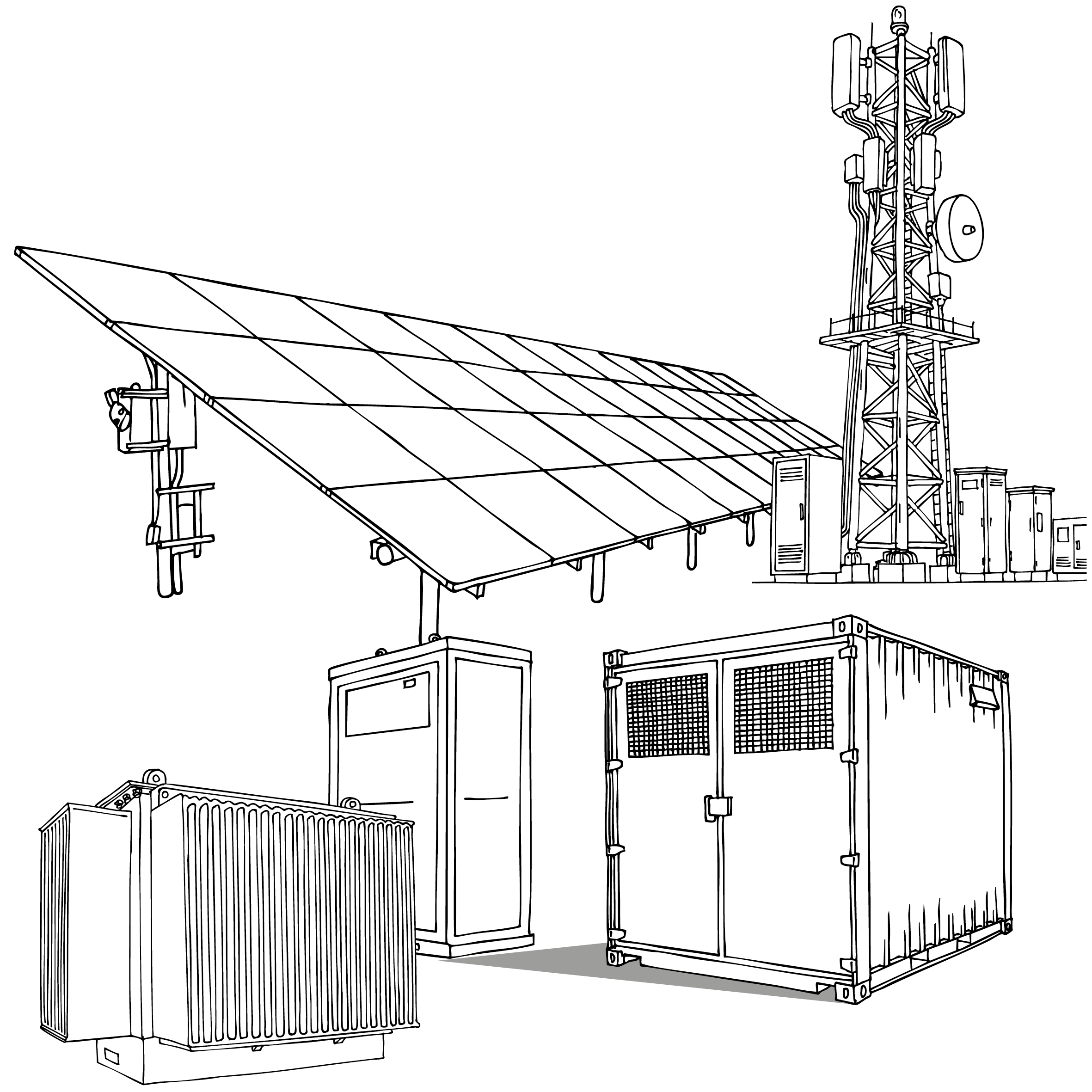
A resilient backup system is defined by the consequences of an outage, the loads that must continue, the transfer time they can tolerate and the duration for which energy must remain available.
Is Hydrogen a Way Forward?
This is a brief, high level summary into the reasoning and assumptions supporting the use of backup power solutions that could use renewable hybrid hydrogen technology to replace diesel generators (when it is truly applicable.)
Remember that hydrogen is not yet the solution for power in every situation.
Size and Scale Matters
Power supplies of all sizes can be protected in times of emergency or technical faults.
The smallest load of say 300W could be as critical to some services as the larger 450 kW loads required to service whole facilities with larger electrical devices.
The principles for backup power are the same, but the best technology for the power protection is subject to careful investigation.
Many of the examples given below are for backup power on the larger scale, but the same governing principles are valid for all sizes.
Step by Step
The details below are intended to set out some principles and actions to consider when planning for new or replacement technology that will effectively protect critical power supply.
This is designed to provide a step by step guide and allow for note taking, and initial planning with real numbers and data peculiar to your specific location and circumstance.
To do this you can progressively complete the Backup Power Needs Analysis Form at this end of this application summary document.
How to Use This Information
Take from this summary the details that can help you the most and make a plan to do something with what you learn or are prompted to do.
Pay particular attention to the section “14. Pathway to Successful Backup Power” and invest the time and resources necessary today while you have the luxury and opportunity to prepare for the time when you do not.
2. Overview
What Is a Backup Power System?
TEXT
Heading
TEXT
TEXT
3. The Challenge
Critical Loads That Can’t Stop
Critical backup is not simply a generator of a particular size. It is an operating plan for maintaining defined services through a particular type and duration of power disruption.
To give clarity to this real business challenge, the first step is to identify the operational elements that require electrical energy and will have serious business or human impact if the normal power supply was interrupted, disconnected, or suffered minor or intermittent quality issues.
To be properly prepared you must analyse and understand your needs, adjust plans, change and update technology, and implement improved processes.
Critical Loads
Identify the equipment, controls, communications and supporting systems that must remain available in the event of a power outage.
Prioritise each of the critical loads based upon your business objectives and leadership focus.
Transfer Times
Define whether each critical load can tolerate seconds of interruption or requires uninterrupted supply.
What was once considered an allowable interruption period (even if it was only a few seconds), could easily now be reversed due to current business and customer expectations.
Required Duration
Plan for the credible outage, including uncertainty about grid restoration or fuel delivery.
Recovery Time and Processes
Decide how the site returns to normal operation and retains enough reserve for another possible interruption.
4. The Goal
Define the Load
To begin with, the most important critical energy loads must be separated from the nice-to-have power loads that are not crucial to operation in an emergency.
Some hard questions are often needed to reduce the loads you are going protect. This can reduce the size, stored fuel and cost of, and simplify your complete backup system.
This process of discussion and consideration allows for a prioritised list to be created that can be investigated with modelling and calculators. This list can be updated at any time to see the resultant changes in backup power recommendations.
A load study should include data like starting currents, short power peaks, continuous demand, operating schedules and any equipment needed to keep the primary service safe.
Information to Collect
This important step is a real gathering process of detailed figures and performance requirements.
Care should be taken to not only prepare this data for the current hardware and facility to be protected, but try and provide for what could happen to your energy demands in the next 5 or 10 years.
Things to look at include:
- Peak and continuous electrical load in kW
- Hourly/daily energy requirement in kWh
- Motor, compressor and pump starting loads
- Maximum acceptable interruption for each critical system
- Required backup runtime and contingency reserve
- Power quality and voltage requirements
- Automatic or attended restart expectations
- Seasonal and future changes in load to be considered
5. Understanding Technology
Hybrid System Architecture
Text
Give Each Technology a Clear Job
A battery can respond instantly and manage changing loads. A fuel cell can sustain electrical output while hydrogen storage determines how long that output remains available.
Stage 1 - Detect and Isolate
Protection and control equipment detects loss or deterioration of the normal supply and safely separates the protected system where required.
Stage 2 - Bridge the Interruption
A UPS or battery maintains sensitive loads immediately and supplies rapid starts or short-duration peaks.
Stage 3 - Sustain the Load
The fuel cell system supplies ongoing energy, recharges or supports the battery and draws hydrogen from the available storage.
Stage 4 - Recover and Retain Reserve
The controls manage return to the grid, post-event checks, refuelling notifications and readiness for the next outage.
6. What are the Options?
Where Hydrogen Fits or Alternatives May Be Better
Text
Compare a Complete Solution, Not Individual Devices
Direct electrification and batteries will often be the simplest and most efficient choice. Hydrogen becomes more relevant where longer duration, modular stored energy, transportable fuel or operating constraints justify the additional power equipment.
Battery Only
Well suited to instantaneous transfer, short outages, peak support and sites that can recharge reliably between events.
Things to Consider
- Required duration
- Battery ageing
- Temperature
- Recharge time
- Replacement plan
Battery and Fuel Cell
Combines rapid electrical response with energy duration determined by stored hydrogen and the selected fuel cell output.
Things to Consider
- Hydrogen supply
- Controls
- Storage
- Ventilation
- Maintenance
- Full-cycle cost
Fuel Cell Only
TEXT
Other Backup Pathways
Grid reinforcement, demand reduction and conventional or alternative-fuel generators may remain suitable in some operating cases.
Things to Consider
- Emissions
- Noise
- Fuel deterioration
- Delivery access
- Servicing
- Outage risk
Decision Guide
Choose the lowest-complexity system that meets the documented continuity, safety, environmental and commercial requirements.
7. Decision Drivers
Factors That Influence Choice of Technology
Text
Cost of the Technology
Cost - Up front low cost vs higher upfront and cheaper lifetime
Cost of temperature control to maintain the batteries.
Batteries need to be replaced every 8 years. Industry standard practice.
Ability to Be Customised
Emissions
Expandability
Reliability
Effectiveness
Environmental Factors
Sound, Perception
Project Support
Define Your Critical-Load Requirement.
Share the load profile, transfer time, runtime, reserve and site constraints so the technology options can be compared on the same basis.