Changing demand
Base loads, motor starts, pumps, refrigeration, workshops and seasonal activity create different power and energy requirements. A peak figure alone cannot describe the site.

Introduction
Provide dependable electricity where a strong grid connection is unavailable, vulnerable or uneconomic.
An off-grid project is a complete energy service rather than a single generator. It must supply the site's changing power and energy needs through weather, access disruption, equipment maintenance and future growth. This page explains how hydrogen may complement efficiency, renewable generation, batteries and existing backup equipment in a New Zealand setting.
The Challenge
Remote sites can be exposed to long electricity lines, severe weather, difficult terrain and delayed fuel or maintenance access. The customer's challenge is reliable operation; the power provider's challenge is delivering that reliability at a proportionate lifecycle cost.
Base loads, motor starts, pumps, refrigeration, workshops and seasonal activity create different power and energy requirements. A peak figure alone cannot describe the site.
Solar, wind and water availability change by hour and season. Several low-generation days can exhaust storage even when the annual renewable resource appears strong.
Specialist technicians, spare parts and fuel may be hours away. Roads, bridges and communications can fail during the same event that interrupts power.
Loss of electricity can also mean loss of water, wastewater, refrigeration, communications, heating, lighting, income and a safe place for people to gather.
Operating an off-grid system introduces responsibilities normally carried by a retailer, network and generator. Someone must manage priorities, alarms, stored energy, routine tests, maintenance and the response to a failure.
An electricity distributor must compare line renewal with a stand-alone alternative, then define ownership, service levels, monitoring, power quality, maintenance responsibilities and how future customer demand will be handled.
The Goal
The objective is not to maximise any particular technology. It is to meet an agreed level of reliability, safety, environmental performance and cost with equipment that the site can realistically operate and support.
01
Remove avoidable consumption and separate critical, deferrable and discretionary loads before sizing generation or storage.
02
Use interval data to record peak kW, daily kWh, starting loads and seasonal operating patterns.
03
Agree how long the site must continue through low renewable output, equipment faults and delayed resupply.
04
Confirm how reserves are rebuilt, fuel is replenished and the system is returned to normal after an event.
Understanding the Technology
A practical topology combines energy sources, electrical storage, long-duration fuel, power conversion and supervisory controls. The final arrangement depends on whether hydrogen is delivered or produced onsite.
Solar, wind or micro-hydro supplies immediate loads and recharges electrical or hydrogen storage when resources are available.
The battery responds quickly, starts motors, supports short peaks, smooths renewable variation and can provide black-start power for controls and auxiliaries.
Hydrogen may be delivered in compliant storage or produced by an electrolyser using suitable electricity and water, then compressed and stored for later use.
A fuel cell converts hydrogen into electricity for sustained operation. A hybrid controller coordinates the fuel cell, battery, renewable generation, loads and any retained generator.
What are the Options?
Hydrogen should be considered alongside—not instead of—efficiency, grid connection, renewable generation, batteries and conventional backup.
May remain the lowest-complexity answer where the line can be built and maintained economically. Compare its full renewal, vegetation, fault-response and resilience costs.
Often the most efficient solution for daily cycling and short-duration autonomy. Confirm winter generation, battery replacement, recharge time and unusual multi-day events.
A mature New Zealand stand-alone architecture. Diesel adds duration but introduces delivery, emissions, noise, servicing, spills and fuel-storage considerations.
Strong local resources can reduce storage and fuel requirements, but seasonal data, environmental effects and maintenance access must be assessed.
Can add quiet long-duration generation without onsite electrolysis. Suitability depends heavily on hydrogen availability, quality, delivery interval and delivered price.
May retain surplus renewable energy for infrequent or seasonal use, but adds an electrolyser, water treatment, compression and greater conversion losses than direct battery storage.
Typical New Zealand Use Cases
Remote radio, telemetry and control sites with modest continuous loads and demanding availability requirements.
Water, milking, refrigeration, workshops, staff accommodation and seasonal production at the end of vulnerable rural lines.
Electricity for communications, water, wastewater, refrigeration, lighting, cooking and community response during an emergency.
Remote huts, lodges, islands and visitor facilities where fuel transport, noise and environmental impact matter.
Mobile or isolated operations with workshops, pumps, processing equipment and expensive consequences when energy is unavailable.
Temporary power for roads, bridges, water assets and worksites before a grid connection exists or after infrastructure is damaged.
Quiet temporary electricity for outdoor events, entertainment and film locations where local exhaust and generator noise affect people or production.
Civil Defence centres, communications, water and community buildings required after earthquakes, storms, slips or floods.
Isolated facilities where resilient electricity may complement hydrogen used for vehicles, handling equipment or another transport application.
Solution Size
Off-grid loads range from a few watts of monitoring equipment to multi-megawatt industrial facilities. The following bands are indicative discussion ranges. They are not recommended designs or New Zealand averages.
Indicative remote and off-grid power scale | ||
|---|---|---|
| Application | Indicative power | Typical considerations |
| Monitoring, communications or a small hut | Below 1–5 kW | Continuous low load, communications and high reliability. |
| Remote home, club or small facility | 5–15 kVA | Lighting, refrigeration, water, appliances and seasonal heating. |
| Farm, marae, lodge or community facility | 15–100 kW | Pumps, refrigeration, kitchens, workshops and accommodation. |
| Construction, events and temporary works | 20–500 kW | Variable loads, motor starts, rapid deployment and relocatable equipment. |
| Remote processing or infrastructure | 100 kW to multi-MW | Large motors, continuous production and high outage consequences. |
Published New Zealand examples range from a 5 kVA inverter with 7.6 kWh of battery storage at a small coastal club to 30 kVA three-phase systems with 32 kW solar arrays and 60 kWh batteries at Moawhango. These examples illustrate range, not a standard configuration.
Benefits and Limitations
Practical Considerations
Provide priorities and automatic load shedding so non-essential equipment cannot exhaust the reserve needed by critical services.
Account for temperature, snow, wind, salt, dust, flooding, seismic exposure, wildfire and the effect of those conditions on generation and access.
Monitor generation, battery state, hydrogen inventory, alarms and equipment health using communications that remain useful during a disruption.
Define local checks, specialist visits, consumables, replacement components and the safe operating mode while equipment is unavailable.
Confirm delivery vehicle access, storage changeover, lead time, minimum order, refill connection and how supply will continue after a natural-hazard event.
Allow for new buildings, vehicles, processing equipment and electrification without assuming that generation and storage can expand without redesign.
Safety
Hydrogen is an extremely flammable compressed gas. It is buoyant, can escape through very small openings and may accumulate at high points if ventilation is unsuitable. High pressure, ignition control, material compatibility and emergency response must be addressed by competent people.
There is no single universal separation distance. Requirements depend on hydrogen quantity, storage type, transfer activities and distances to protected places, public places and other hazardous substances.
Commercial Considerations
A useful comparison includes reliability, fuel logistics and avoided disruption—not only the purchase price of a generator or the apparent cost per kWh.
Compare stand-alone equipment with line extension or renewal, vegetation management, easements, fault response and future reinforcement.
Include renewable generation, battery, fuel cell, hydrogen storage, electrolyser where applicable, controls, electrical works, civil works, design and commissioning.
Model delivered or onsite hydrogen using usable kilograms, production electricity, water, compression, transport, storage rental and minimum delivery quantities.
Allow for remote monitoring, inspections, specialist maintenance, stack and battery replacement, spares, certification, insurance and end-of-life obligations.
Estimate lost production, spoiled product, animal welfare, water interruption, recovery time, safety and reputational consequences.
Count actual diesel displaced and verify the production pathway for hydrogen. New Zealand's current stationary industrial diesel factor is about 2.68 kg CO₂-e per litre before remote delivery is considered.
New Zealand Examples
Publicly documented operating hydrogen off-grid systems remain limited in New Zealand. The examples below distinguish current stand-alone solutions from hydrogen demonstrations and development work. They are not presented as NZ Hydrogen installations.
Powerco replaced 15 km of ageing line serving isolated customers with Base Power solar, battery and diesel systems. The project demonstrates the network, access and resilience case that a future hydrogen hybrid may address.
Read the Powerco case studyA small solar-only stand-alone system uses a 5 kVA inverter and 7.6 kWh battery where replacing coastal lines was impractical. It is a useful example of a load where hydrogen would add unnecessary complexity.
Read the Powerco case studyThe community is assessing solar, battery and islanding options for communications, community facilities, water and wastewater following a major event. Existing backup relies on a 22 kVA diesel generator and fuel availability.
Read the Electricity Authority studyPowerco combines solar, batteries and diesel beside key community buildings to support heating, lighting, cooking and device charging during extended outages.
Explore community resilience projectsPowerco, Base Power and Callaghan Innovation have previously investigated a hydrogen-powered generator within a stand-alone system. This is development evidence rather than a claim of broad commercial deployment.
Read the published project contextPortable Hyundai fuel-cell generation has been demonstrated in New Zealand with aviation and Defence applications, showing a pathway for quiet temporary power while supply and commercial arrangements continue to develop.
View the portable generatorProject Process
01
Identify the site, current supply, outage or access problem, critical services, sustainability objectives and decision timeframe.
02
Collect interval demand, seasonal activity, starting loads, existing assets, renewable resources, access and space constraints.
03
Compare efficiency, grid, battery, diesel, alternative fuels and hydrogen hybrids against one agreed requirement.
04
Define architecture, power ratings, stored energy, hydrogen pathway, reserve, controls, site layout and approvals.
05
Confirm equipment scope, supplier quotations, lifecycle assumptions, delivery programme, responsibilities and performance criteria.
06
Complete electrical, pressure-system, civil, safety, consenting and compliance work using appropriately qualified specialists.
07
Verify equipment, protection, operating sequences, alarms, remote monitoring, documentation and operator competence.
08
Compare measured demand, renewable production, fuel use and reliability with the proposal and refine controls or capacity as needed.
Suitable NZ Hydrogen Products
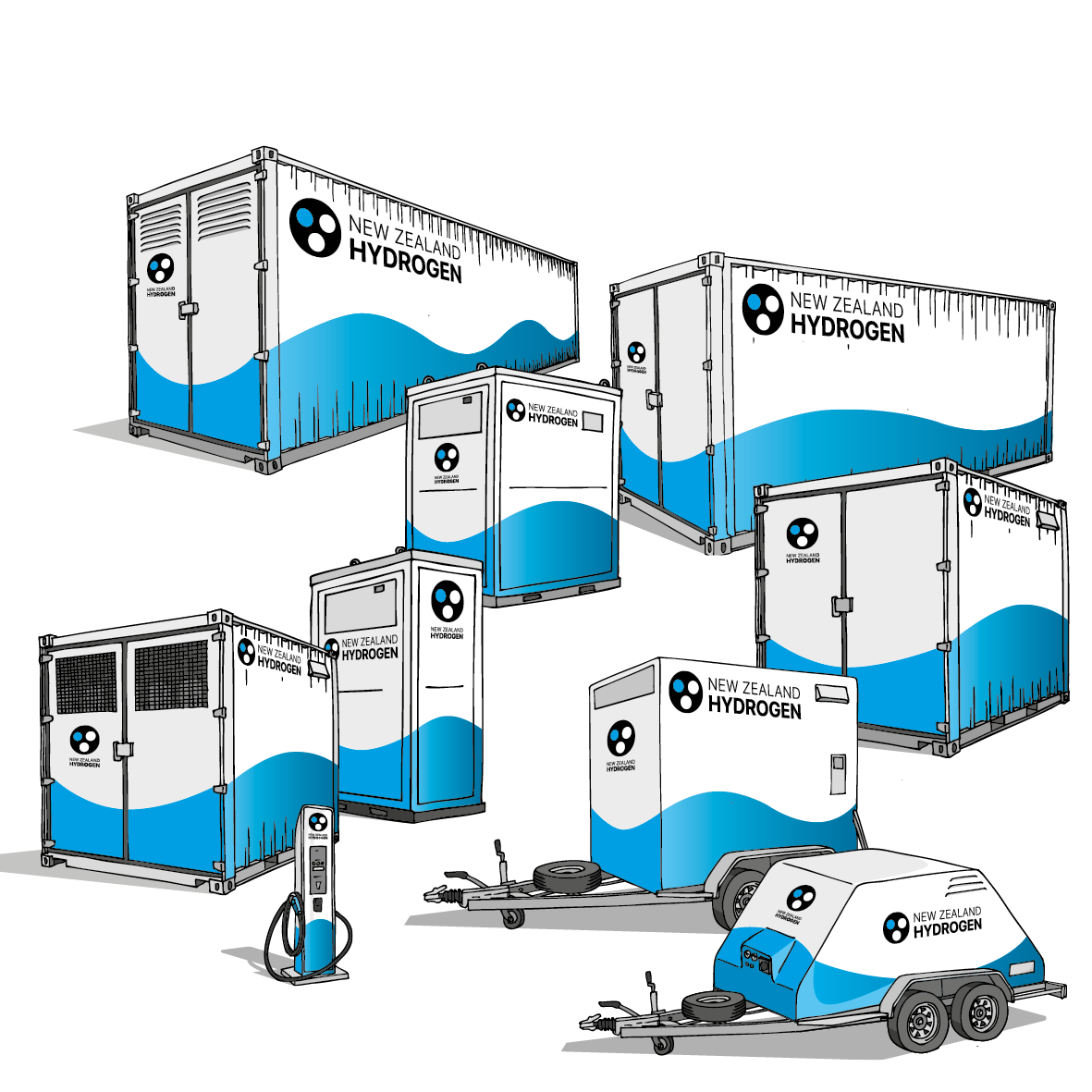
The following ranges may contribute to an off-grid solution. They are starting points rather than a preselected package.
Provide sustained electrical output from stored hydrogen as part of a controlled hybrid power system.
View power-system productsTransport and position usable hydrogen for sites where a delivered-fuel model is appropriate.
View mobile hydrogen storageExplore electrolyser and stationary-storage pathways where onsite renewable hydrogen may be technically and commercially justified.
Explore product rangesFrequently Asked Questions
Batteries are generally more efficient for daily and short-duration storage. Hydrogen becomes more relevant when the required duration, seasonal reserve, transportable fuel or another hydrogen use creates value that a larger battery does not.
Yes. Renewable electricity can operate an electrolyser, but the project must also provide suitable water, treatment, compression, storage and controls. Directly using or storing the electricity in a battery will normally involve fewer conversion losses.
Many off-grid systems benefit from one. A battery can provide black start, rapid response and short peaks while allowing the fuel cell to operate within a more stable range.
Potentially, but not automatically. Confirm starting loads, runtime, hydrogen availability, controls, site layout, maintenance and lifecycle cost. Retaining diesel as a final emergency tier may be sensible during transition or initial operating trials.
The amount depends on the measured energy profile, fuel-cell performance, required autonomy and reserve. Peak electrical power by itself is not enough to determine kilograms of hydrogen.
Hydrogen is not subject to the same fuel ageing mechanism as diesel, but the storage system must control leakage, remain within inspection requirements and keep sufficient usable pressure for the connected equipment.
It can be designed to do so, but winter load, renewable resource, temperature, access and credible low-generation periods must be represented in the sizing model. Annual averages are not sufficient.
A fuel cell produces no diesel exhaust at the point of use, but total emissions depend on how the hydrogen is produced, compressed and delivered. The project should document hydrogen provenance and full supply-chain assumptions.
The reserve policy should cover credible delivery disruption. Options include more stored hydrogen, demand reduction, onsite production, an alternative delivery route or a retained final backup generator.
Hydrogen can be managed safely using appropriate equipment, layout, ventilation, detection, separation, operating procedures and competent maintenance. The design must reflect the actual quantity, pressure, public access and emergency response available at that site.
Scope and Limitations
This information is general and indicative. It is not an electrical design, pressure-system design, safety case, hazardous-area classification, compliance determination, consenting opinion, financial quotation or guarantee of performance.
Actual projects require current site data, supplier information and appropriately qualified specialists. Applicable legislation, standards, WorkSafe requirements, local authority requirements, network rules and certification obligations must be confirmed for the location and equipment selected.
Further Reading
The automatic page update date is shown beside the copyright notice in the shared footer.
Project Support
Share measured demand, the current power arrangement, access constraints and the problem you need to solve so NZ Hydrogen can help identify a useful next step.