
Technology
Store Renewable Energy as Hydrogen .
Connect renewable electricity, electrolysis, storage and fuel cells into one flexible energy pathway.
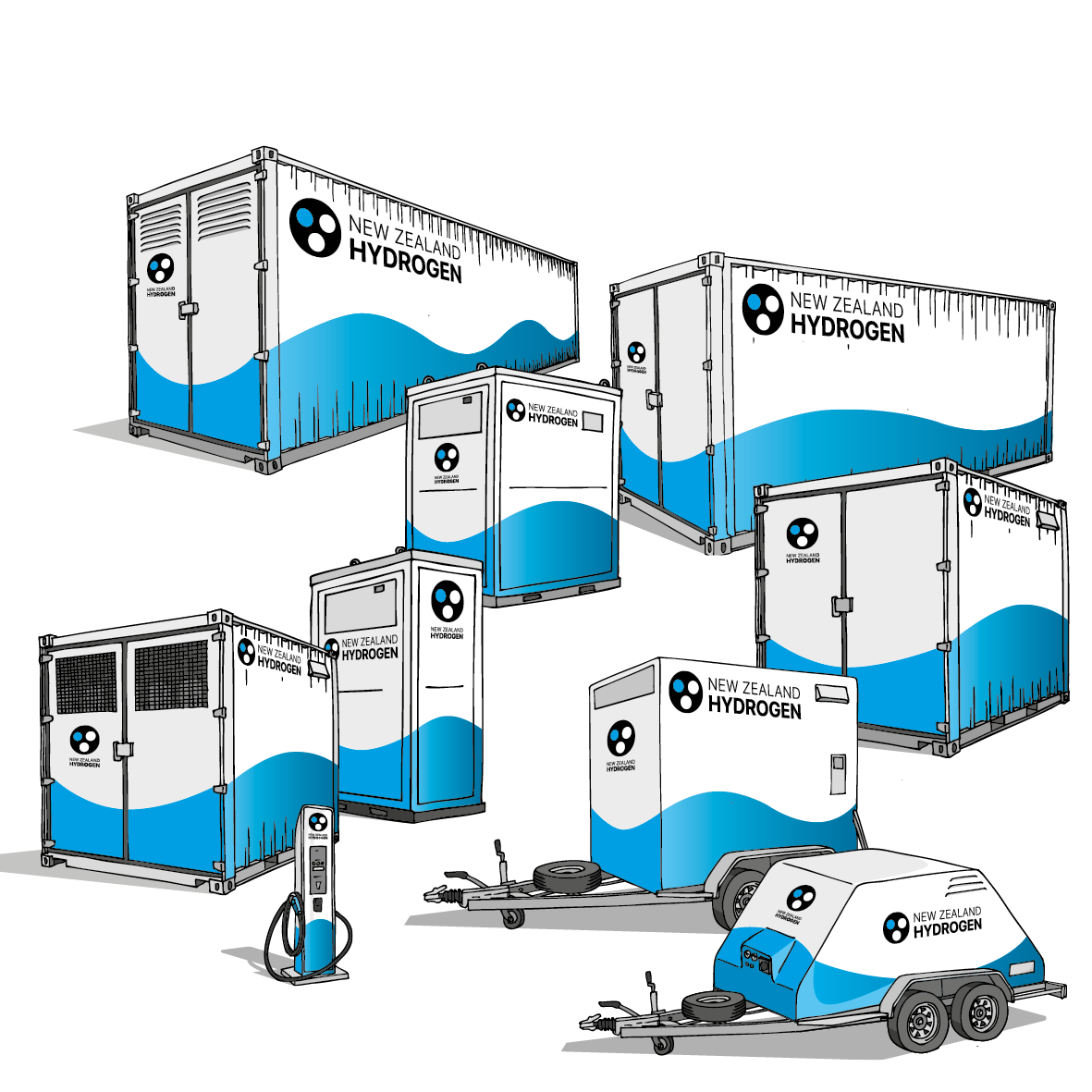
The Energy Pathway
This overview is intentionally plain-language and should be supplemented with project-specific engineering information where required.
Generate Electricity
Use grid or renewable electricity as the input energy source.
Produce Hydrogen
An electrolyser separates water into hydrogen and oxygen.
Store Hydrogen
Hydrogen can be retained for use when energy is needed.
Convert to Useful Energy
A fuel cell can convert hydrogen into electricity, with heat and water as outputs.
System design
Hybrid by Design.
Hydrogen does not need to work alone.
It can be integrated with batteries, solar, wind, grid power and conventional backup equipment. The right combination depends on load shape, resilience needs, operating hours, space and economics.
Common questions
Technology FAQs
Is hydrogen a battery replacement?
Not necessarily. Hydrogen and batteries can serve different roles and may be combined in a hybrid system.
Can hydrogen be produced on site?
Yes, where a suitable electrolyser, electricity supply, water supply and compliant site arrangement are available.
Is every project the same?
No. Demand, storage duration, pressure, location and intended use can materially change the system design.