Technical challenge
Model route flows, vehicle range, daily kilograms, peaks, detours, station downtime and minimum reserve at each location.
Introduction
Coordinate vehicles, stations and hydrogen supply so reliable route coverage grows with committed demand.
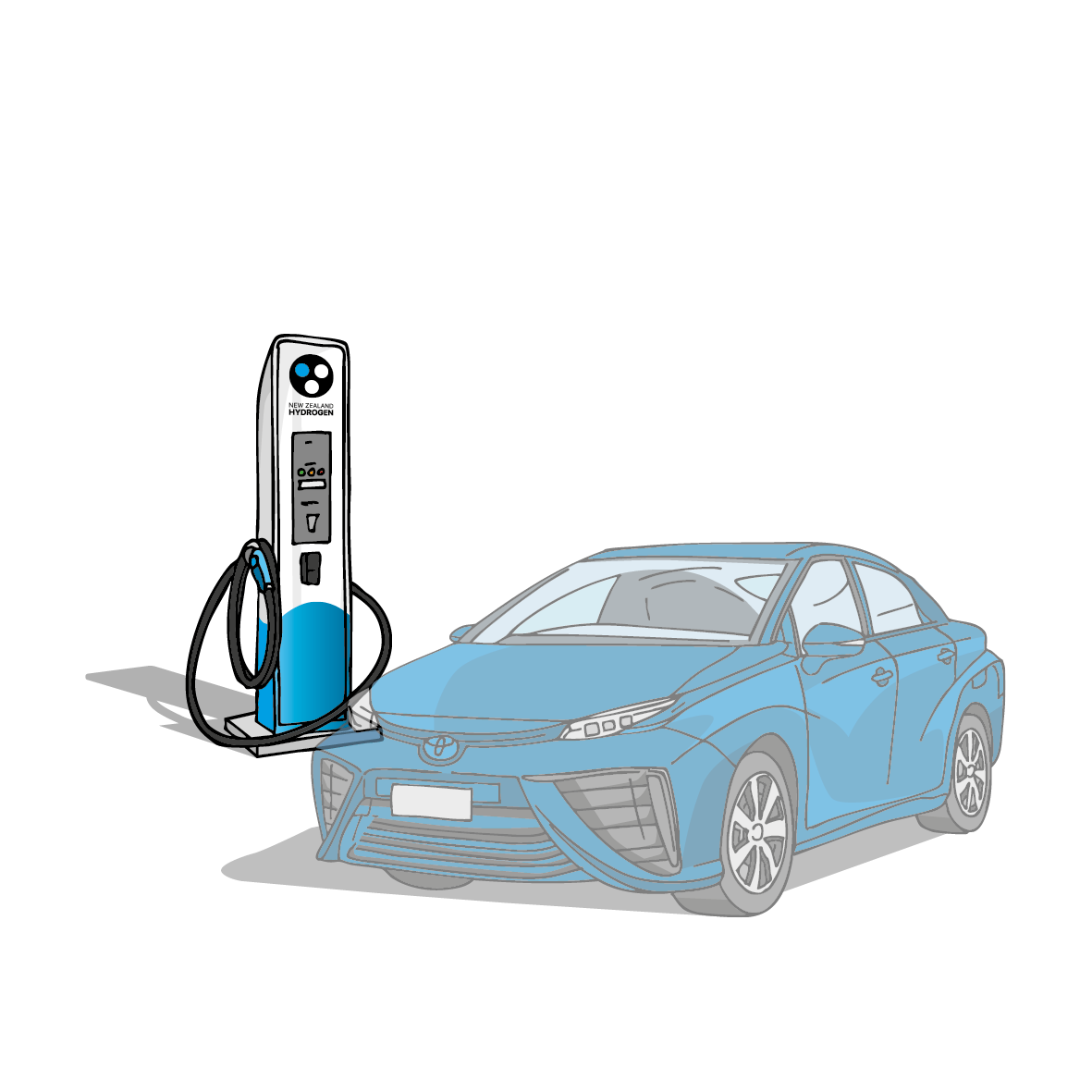
Corridor stations enable vehicles to operate beyond a single depot and require consistent access, protocols, fuel quality and operational support.
A corridor is a network service: station location, uptime, compatibility and contingency matter as much as nominal dispensing capacity.
The Challenge
New Zealand has long freight routes and a relatively small early market, making staged locations and anchor fleets particularly important.
Model route flows, vehicle range, daily kilograms, peaks, detours, station downtime and minimum reserve at each location.
Reliability, utilisation, logistics, asset life and future demand must be translated into a commercial requirement that can be compared consistently across competing solutions.
The selected pathway must be understandable, maintainable and safe for the people operating it. Training, access, disruption, noise, local air quality and confidence in support can be as important as equipment performance.
The Goal
The goal is to deliver the required service with a practical combination of efficiency, electrification, renewable energy, storage, hydrogen and operational controls—not to maximise any one technology.
Map committed fleets, routes, pressure classes, station spacing, land, power, delivery access, growth and redundancy.
Understanding the Technology
The network combines hydrogen production or delivery, regional storage, station compression and dispensing, telemetry, payment and uptime support.
01
Identify the electricity, renewable resource, delivered fuel, water or existing process input and when it is available.
02
Define production or delivery, hydrogen quality, pressure, usable kilograms, storage duration and replenishment.
03
Select equipment around useful output, response, efficiency, operating hours, redundancy and integration with existing assets.
04
Measure the useful transport, electricity, heat or industrial service actually delivered to the user.
What are the Options?
A corridor can support high-utilisation vehicles that need long range and predictable refuelling without relying solely on depot infrastructure.
Depot charging, opportunity charging, rail and logistics redesign may meet some corridors more efficiently.
Typical Use Cases
New Zealand has long freight routes and a relatively small early market, making staged locations and anchor fleets particularly important.
Auckland, Waikato and Manawatū stations can support committed trucks on high-volume freight routes.
Public access can complement depot refuelling and provide contingency where fleets share common routes.
Expansion should follow credible vehicle demand, hydrogen supply and a service model rather than station geography alone.
Solution Size
Model route flows, vehicle range, daily kilograms, peaks, detours, station downtime and minimum reserve at each location.
Station capacity should be expressed as kg/day, peak vehicles/hour, storage pressure and days of reserve. Committed fleet demand determines useful scale more than the number of dispensers.
| Measure | Why it matters | Evidence to collect |
|---|---|---|
| Maximum output | Sets peak equipment and connection capacity. | Measured peaks, route demand, starting loads or process rate. |
| Useful energy | Determines fuel, storage and replenishment. | Hourly, daily, seasonal or route-level consumption. |
| Operating window | Shapes utilisation, recovery and maintenance. | Shifts, dwell time, event duration and annual hours. |
| Reserve and redundancy | Protects service through credible failures or delays. | Criticality, outage tolerance, alternative supply and resupply time. |
These measures structure an initial conversation; they are not a design or equipment recommendation.
Benefits and Limitations
Potential value includes route confidence, shared infrastructure and aggregation of demand across fleets.
Early low utilisation, high uptime expectations, siting, compatibility and coordinated investment create substantial project risk.
Practical Considerations
Plan source diversity, delivery resilience, station storage and recovery so one outage does not strand corridor users.
Confirm space, access, foundations, ventilation, weather exposure, security, vehicle movements and future expansion.
Define trained roles, monitoring, inspections, planned maintenance, spare parts, alarms and emergency response.
Test production or delivery capacity, hydrogen quality, refill intervals, route disruption, reserve and recovery after an event.
Safety
Public sites require robust traffic management, separation, impact protection, emergency systems, metering and clear user instructions.
Address loss of containment, ignition, ventilation, pressure, impact, electrical hazards, hazardous areas and emergency isolation.
Define competence, training, inspection, permits, signage, access control, incident response and communication with emergency services.
Applicable requirements depend on quantities, pressure, equipment, location and activity. Separation distances and approvals cannot be selected from a generic web page.
Commercial Considerations
Stage capacity with signed demand, assess network effects and include redundancy, land, service and low-utilisation years.
Equipment, civil works, connection, storage, controls, consent, engineering and contingency.
Electricity, hydrogen, delivery, labour, maintenance, inspections, consumables and replacement parts.
Annual output, shared infrastructure, contracted demand and the effect of idle capacity on unit cost.
Avoided downtime, emissions, noise, constrained infrastructure, fuel volatility, residual value and technology maturity.
New Zealand Examples
New Zealand hydrogen activity includes operational trials, demonstrations, commercial proposals and developing supply chains. Examples added to this page should identify what operated, where, for how long, the measured output and the source of the claim.
Operating network
The Government marked the opening of New Zealand's first hydrogen-refuelling network at Wiri in 2024. EECA now reports stations in Auckland, Hamilton and Palmerston North.
Read the network milestoneSupply project under construction
Construction began in 2026 on the Kapuni renewable-electricity and hydrogen project intended in part to supply Hiringa's transport refuelling operations.
Read the construction announcementApplication Evidence
The stations are operating infrastructure; the Kapuni production facility is under construction. Corridor growth remains dependent on vehicle uptake, reliable fuel supply and station utilisation.
Project Process
01
Confirm the service problem, stakeholders, timing, present system and reasons for considering change.
02
Collect operating data, site constraints, supply information, safety requirements and commercial assumptions.
03
Screen credible pathways on the same system boundary and document exclusions, sensitivity and uncertainty.
04
Complete concept design, stakeholder engagement, approvals, procurement, implementation and performance verification.
Suitable Products
Product suitability depends on the measured requirement and complete system design. Review the current ranges as starting points rather than standalone recommendations.
Review electrolyser and supply options around required quality, production rate and operating schedule.
Explore product rangesMatch usable kilograms, pressure, refill route, transport and reserve to the operating requirement.
Explore storage productsCoordinate continuous power, transient response, batteries, inverters, controls and monitoring.
Explore power systemsFAQ
No. Depot charging, opportunity charging, rail and logistics redesign may meet some corridors more efficiently. The correct comparison uses the same final service, site conditions, reliability and lifecycle boundary.
Map committed fleets, routes, pressure classes, station spacing, land, power, delivery access, growth and redundancy.
A corridor can support high-utilisation vehicles that need long range and predictable refuelling without relying solely on depot infrastructure.
Stage capacity with signed demand, assess network effects and include redundancy, land, service and low-utilisation years.
No. Required controls and separation distances depend on the actual inventory, pressure, equipment, activity and site. Use current requirements and appropriately competent project specialists.
Scope and Limitations
This material is general information for early customer and project conversations. It does not replace engineering, financial, legal, safety, environmental or regulatory advice. Technology performance, prices, hydrogen availability, standards and legal requirements change; verify current information for the actual New Zealand site and proposed activity.
Further Reading
Project Support
Share the operating requirement, location, timing and constraints so the next questions and evidence can be identified.